BEHIND THE LEGACY
A clockmaker, a prize, and a fight for recognition
In 1714, Britain’s Parliament offered rewards of up to £20,000 for a reliable way to find longitude at sea—how far east or west a ship had sailed. Getting it wrong could put a ship miles off course.
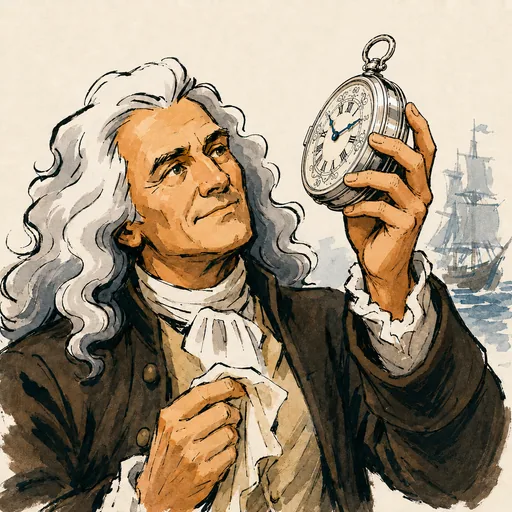
John Harrison was a carpenter and self-taught clockmaker. While astronomers worked on reading longitude from the Moon and stars, he spent decades building timekeepers that could withstand a moving ship. A clock that kept the time at a known port could be compared with local time to work out longitude.
His H4 sea watch met the top reward’s accuracy requirement in its 1764 trial, but the payment became a battle. The Board of Longitude, which had helped fund his work, required him to reveal the mechanism and demonstrate that it could be reproduced before receiving the full reward. Harrison believed he had already earned it. Astronomer Royal Nevil Maskelyne favored the rival lunar-distance method.
John and his son William appealed to King George III, then petitioned Parliament. In 1773, when Harrison was 80, Parliament granted him a further £8,750. Building a successful timekeeper had taken decades; securing recognition demanded persistence of its own.
Follow the evidence